
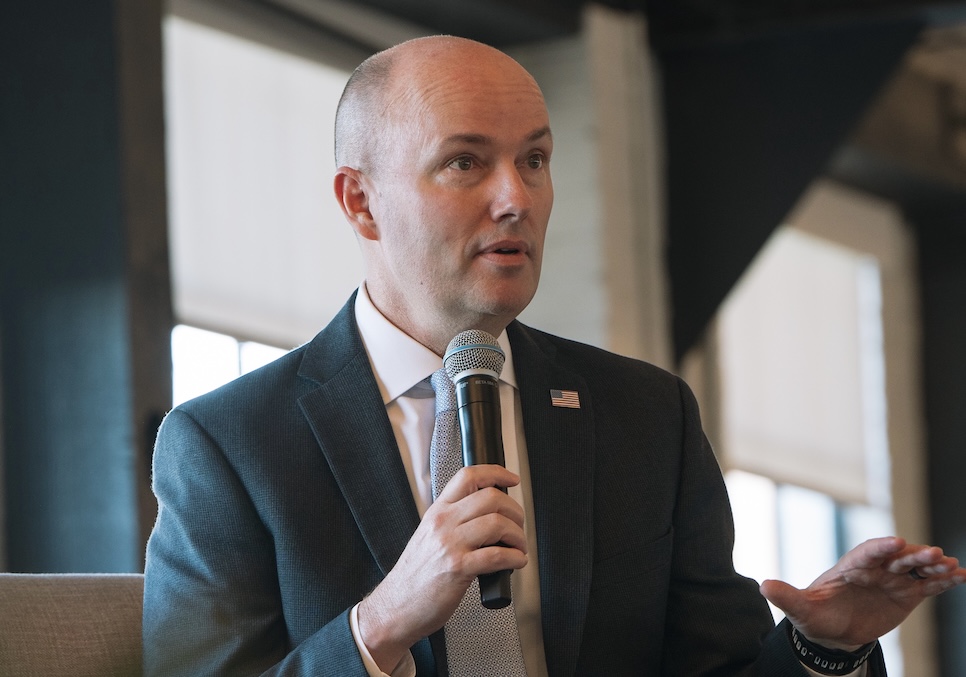
Utah – Utah Gov. Spencer Cox is pushing back against a U.S. Department of Justice investigation into Lt. Gov. Deidre Henderson after she refused to turn sensitive Utah voter information over to the federal government.
Cox said legal disagreements between Utah and the federal government should be handled through the courts rather than through an investigation or threats against a state official carrying out her responsibilities under Utah law.
“Legal disagreements between Utah and the federal government should be resolved in court,” Cox said. “It is wrong for the DOJ to investigate or threaten the lieutenant governor for carrying out her responsibilities under Utah law.”
The comments came after the DOJ’s Civil Rights Division notified Henderson that she is under investigation following her refusal to provide federal officials with voter information.
According to KSL, the DOJ letter said Henderson was under investigation over whether she failed to comply with provisions of the Civil Rights Act of 1960, the National Voter Registration Act and the Help America Vote Act. The letter also instructed Henderson to preserve documents and other records that could be relevant to the investigation.
The dispute centers on the federal government’s efforts to obtain Utah’s statewide voter registration information. Federal officials previously requested an unredacted electronic copy of the state’s voter registration list, including information such as voters’ names, dates of birth, addresses and certain identification information. Utah declined to provide the requested information in the form sought by the federal government.
The Justice Department said the letter was sent to states involved in active litigation over their refusal to provide voter lists requested by the federal government. The department had also threatened Henderson with possible criminal prosecution in July after she rejected requests to turn over Utah’s voter rolls.
Henderson previously criticized the federal investigation, saying the DOJ should focus on actual election problems rather than what she described as harassment of election officials. Her office has argued that neither state nor federal law gives the department the right to collect private information belonging to law-abiding Utah voters.
Cox’s latest comments put him behind Henderson as the dispute between Utah and the Trump administration continues to move through the courts.
The conflict is part of a broader legal fight between the federal government and several states over access to voter registration information and federal authority over state-administered elections.